
How to Secure a Kodiak 900 for Overnight Parking at an FBO
Note: This article is for reference and educational purposes only. Securing procedures may vary by airport, FBO, and operating environment. This is not a substitute for your Pilot's Operating Handbook (POH) or any applicable operator requirements. Always refer to your current POH and consult a qualified flight instructor or Kodiak-authorized training provider.
Eight hours of flying is behind you. The last thing you want to do is spend another 20 minutes on the ramp. But getting the loose equipment on correctly before you walk away is one of those habits that pays for itself the first time something goes sideways overnight — and at a busy FBO with jets moving around, things go sideways.
Here's exactly what we put on the Kodiak 900 before leaving it outside overnight.
Nose Wheel Cover
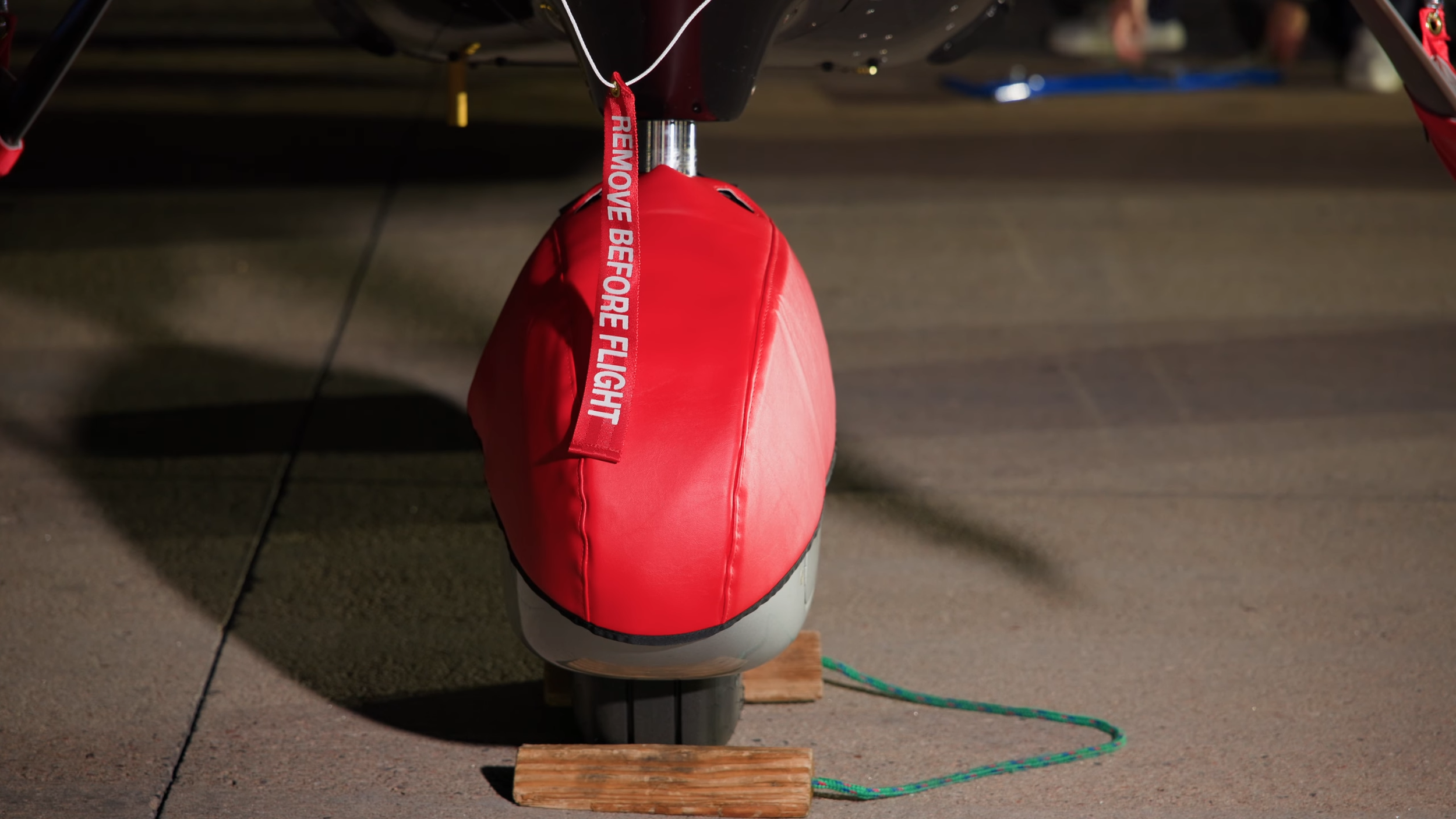
The 900's wheel fairings are one of its most distinctive features, and they also make the nose wheel a little more vulnerable during ground handling. Any new Kodiak 900 should come with a nose wheel cover — a molded cover that slips over the top of the fairing, wraps around the nose hydraulic, and clips in place at the back.
Two things to note when fitting it: the tow fittings have holes in them that the cover is designed around, and there are also tow extenders that come with the airplane — two small pieces that insert into the tow fitting and make it significantly easier for ground crew to get a tow bar on. Leave those accessible. If the FBO needs to move the aircraft overnight, you want that process to be easy and the nose wheel to be protected while they do it.
Prop Anchors
With a PT6, the prop spins freely. That's normally a non-issue, but leave it unsecured on a windy ramp or during a tow and you've got a propeller that can rotate into the tow bar — and prop damage is expensive.
Most FBOs at larger airports require prop anchors these days anyway, but put them on regardless of whether it's required. The anchors take 30 seconds to install and the cost of skipping them is a blade strike you didn't need.
Inlet and Scoop Plugs
Two types of plugs go on before overnight parking:
The main engine inlet plug seals the PT6 intake. Birds, debris, insects — a surprising amount of things can find their way into an engine inlet overnight, especially at airports surrounded by trees or fields.
The NACA inlet plugs cover the scoop inlets on the forward fuselage. Same logic — prevent anything from working its way in through the night.
Both should go on any time the airplane sits outside for an extended period.
Pitot Covers
The pitot covers are primarily about keeping precipitation out — rain, snow, ice. If there's any chance of freezing overnight, these go from recommended to mandatory. A blocked pitot tube on departure is not a problem you want to discover in the air. Put them on, every time.
Control Lock
This one matters more at busy airports than anywhere else. At a large FBO with heavy jet traffic, jet blast can come from any direction at any hour — from an aircraft taxiing past, a departure on a nearby runway, or ground equipment. Without a control lock, that blast can hammer your ailerons and elevator, cycling the control surfaces repeatedly through the night.
The Kodiak's control lock runs through the yoke and secures both the aileron and elevator inputs. Install it any time the airplane sits out overnight, and especially any time you're parked somewhere with significant jet activity.
The Full Overnight Checklist
Nose wheel cover: Protects wheel fairing during towing and overnight
Tow extenders: Makes FBO tow bar attachment easier
Prop anchors: Prevents prop rotation into tow bar or from wind
Engine inlet plug: Keeps birds and debris out of PT6 intake
NACA scoop plugs: Seals forward fuselage inlets
Pitot covers: Blocks moisture and precipitation
Control lock: Secures ailerons and elevator from jet blast and wind
None of this is complicated, but all of it is easy to skip when you're tired at the end of a long day. Build it into your shutdown flow and it becomes automatic. The airplane is a significant asset — five extra minutes of care at the end of the day is worth it.
Questions about Kodiak ownership, management, or training? Reach out to us at 11-aviation.co.
— Mark Brown, 11 Aviation