
A Complete Guide to the Kodiak 100/900 Lighting System — Interior and Exterior
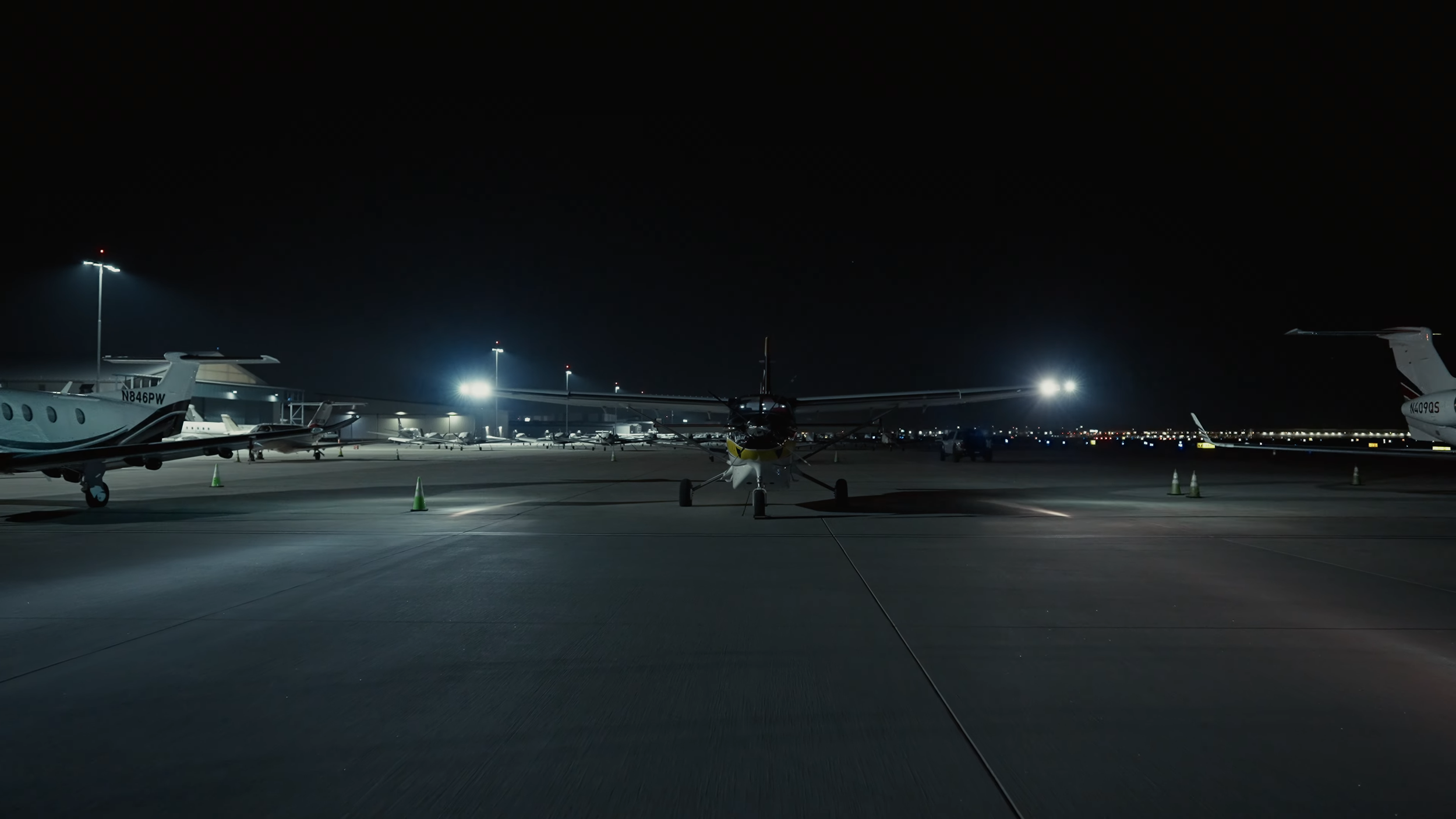
Whether you're a prospective buyer trying to understand what you're getting, or a current owner who wants to know every switch in the cockpit, this is your complete walkthrough of the Kodiak 100 lighting system — inside and out.
A quick note before we dive in: the Kodiak 100 has gone through four distinct variants as of 2025 — Legacy, Series 1, Series 2, and Series 3. Each generation has seen changes across the lighting suite, from incandescent to HID to LED in various places. This guide won't cover every granular change between variants, but if you're in the middle of an acquisition and want that level of detail, that's exactly what our acquisition services are for. We know this airplane.
Now, let's get into it.
Exterior Lights
Beacon Light
Starting on the far left of the lighting panel, the first switch is the beacon light — the red rotating or flashing light at the top of the fuselage. Simple two-position switch: on or off. Nothing complicated here, but don't skip it in your before-start flows.
Strobe Lights
Next up are the strobes, located on the wing tips. Also a straightforward on/off switch. In this Series 1, the strobes are LEDs — bright, low-draw, and long-lasting.
Nav Lights
To the right of the strobes is the nav light switch, which controls the left red wingtip light, the right green wingtip light, and the white tail light. Depending on the variant, the tail light may be on the empennage or integrated into the wing tips — it varies by airplane.
One thing worth knowing: turning on the nav lights automatically dims the environmental control panel. The logic is straightforward — nav lights are typically only on at night under FAA rules, so the system dims the interior lighting accordingly. That said, if you're operating under EASA or certain other foreign aviation authorities, nav lights are required on at all times, so keep that in mind when flying internationally.
Landing Light
The landing light switch in this Series 1 is a two-position switch — off and on. Some Kodiak variants have a three-position switch, but not this one. The light itself is an HID, which makes it the only non-LED exterior light on this particular airplane. It's a spotlight — designed for distance and intensity, cutting far down the runway on approach so you can see what's ahead during landing.
Taxi Lights
The taxi light switch is a three-position switch, and this one's worth understanding fully:
Off — lights out
Pulse — also known as the wingwag. The lights alternate left-right-left-right, making the airplane highly visible to other traffic. This is the position I fly with most of the time. Since these are LEDs, there's no concern about energy draw or bulb wear.
On — both taxi lights illuminated simultaneously
The key distinction between taxi lights and landing lights is their dispersion. Landing lights are spotlight-style — narrow beam, long distance. Taxi lights are wide-dispersion, more like fog lights on a car — they light up everything right in front of you across the full width of the taxiway. Both have their purpose; use them accordingly.
Interior Lights
Cabin Lighting Control
The interior lighting setup on this airplane has three switches and three rheostats — and they work together to give you real control over the cabin environment.
The left-most switch controls the rear cabin electrical and has three positions:
Off — cuts power to all rear cabin lighting and USB ports. Useful for fleet or airline-style operations where you want the back dark for better crew night vision up front.
Normal — power is on and passengers are in control. They can operate their individual reading lights and USB ports independently.
All On — overrides individual passenger control and turns on the center aisle lighting throughout the cabin.
Cockpit Rheostats
The three rheostats control the cockpit panel lighting independently:
Outer knob — dims or brightens the overhead panel LED lighting above the instrument cluster
Center knob — controls instrument panel backlighting
Right knob — adjusts the switch and circuit breaker panel lighting
All three panels are independently illuminated, which means you can dial in exactly the right cockpit lighting balance for nighttime operations without over-brightening any one area.
The Bigger Picture
It's a well-thought-out system. The segmented cabin control gives operators real flexibility depending on mission type — from charter passenger runs to fleet utility work. The LED-forward exterior suite keeps power draw low and maintenance minimal. And the rheostat-controlled cockpit gives pilots precise night lighting without compromise.
As always, the specific configuration on any given airplane will depend on the variant and what's been modified or upgraded over the years. If you're evaluating a Kodiak and want to know exactly what lighting suite you're getting — and what the upgrade path looks like — reach out to us here.
— Mark Brown, 11 Aviation